Placement 1, 4 May to 19 June 2026
Where It Began: Listening in Raploch on Move Health's First Student Placement
Two MSc Physiotherapy students spent Move Health's first placement mapping community strengths, visiting local groups and listening, before anyone proposed a single service.
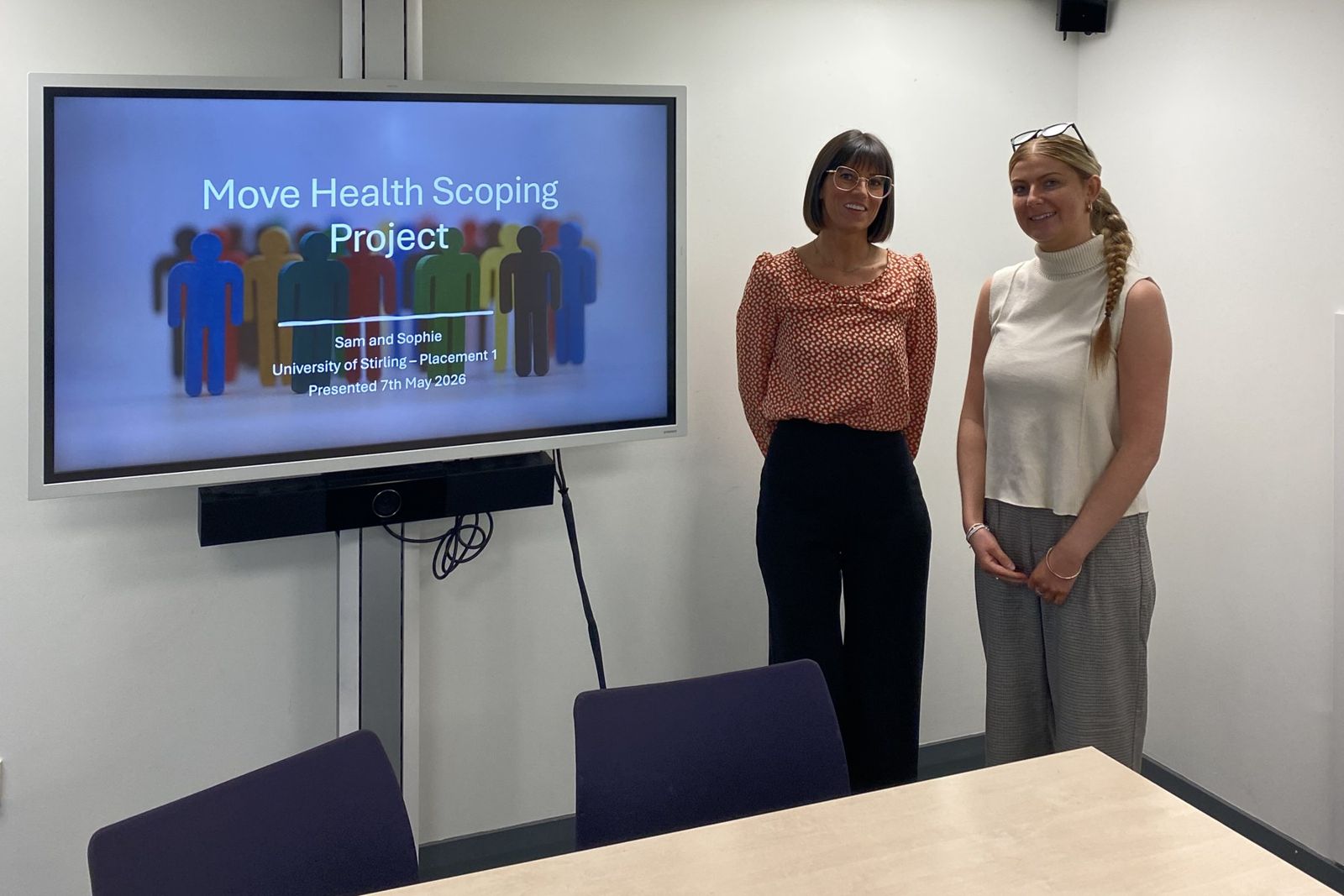
Sam Dolby and Sophie Law describe a moment from their placement: sitting among participants at a community chorus session while a ukulele and a cello played and everyone sang together. It was not a performance. It was a room full of people sharing something.
“For a few minutes, there was a shared sense of rhythm, familiarity, and belonging.”
Moments like that ran through the placement. They pointed to an idea that now sits at the heart of Move Health: health is often made in places where people feel connected, recognised and part of something bigger than themselves.
The brief
Move Health's first student placement was a seven-week Research and Innovation placement. There was no clinical script and no set outcome. The students were asked to find out what already exists in a community, where physiotherapy and prevention might help, and how a service could be shaped with local people, not for them. They worked in Raploch, in Stirling, alongside time with Active Stirling.
What they did
- Scoped the landscapeThey reviewed health policy and the evidence on community-based approaches, and compared four existing UK models: exercise referral, social prescribing, a university-based clinic and an NHS community rehabilitation programme.
- Mapped RaplochThey identified 21 organisations across schools, GP practices, libraries, community groups and the voluntary sector, using desk research, websites and direct observation.
- Reached outThey contacted schools, libraries, community and third-sector organisations, and the council's community development team.
- Went to the placesThey visited Raploch Community Campus, attended the Community Chorus and the HEAL group at Inspiring Communities, and volunteered and assisted with Active Stirling's Bikes Without Barriers, community strength and balance classes and stroke rehabilitation sessions.
- Saw physiotherapy in other settingsThey supported a Tennis Scotland tournament at the University of Stirling and spent a day with the physiotherapy team at St Johnstone Football Club, observing injury assessment, rehabilitation and return-to-sport decisions.
- Started shaping ideasWorking with a local community enterprise, they drafted a proposal for a community listening session and an early service outline, based on a gap in health support they heard about. Both are still drafts, and the partnership has not yet reached delivery.
What they found
Four themes came out of the mapping.
- Raploch is not a blank canvasMany trusted organisations already work on health, wellbeing, youth and community connection. Move Health's role is to explore how physiotherapy could fit into those spaces, not to build something from nothing.
- Trust comes firstMany local organisations focus on inclusion and on people who face barriers to services. Relationships have to come before any offer.
- The area suits place-based workMany community organisations sit within walking distance of each other, which helps outreach, social prescribing and community physiotherapy.
- There are concrete opportunitiesCommunity movement groups, falls prevention, health education drop-ins, partnership working and referral pathways all came up.
The policy and evidence review pointed the same way. Moving services into the community is not enough on its own. Without real engagement and support for behaviour change, inequalities tend to persist. The comparison of existing models showed that many are time-limited, focus on people who are already engaged, and tend to deliver to communities rather than with them. That is the gap Move Health is trying to learn from.
What was hard
The hardest part was the starting point. Developing a service outline with incomplete information was one of the most challenging parts of the placement. The students were asked to think about solutions for people whose experiences they had not yet heard, with no clear parameters and no predetermined outcome.
“Working on community service development asked us to sit with uncertainty, and to acknowledge and accept that we do not have the answers and that we cannot make assumptions.”
They also did not hear back from schools before the placement ended. The time of year probably played a part, and relationships take time. It was a useful reminder that trust is built slowly. Looking back, they wished they had spent more time with community partners at the start.
What they handed on
The students left a handover for the next group: the community map, the scoping work, early relationships and one clear piece of advice, to meet community partners as early as possible.
“The success of this placement depends less on producing documents and more on building trust, listening carefully and understanding the realities of the communities Move Health aims to support.”
What Inspiring Communities said
We asked Inspiring Communities Stirling, where the students spent much of their time, to reflect on the placement.
“They integrated seamlessly into our activity groups, engaging confidently with local residents and taking the time to listen to community members' experiences and perspectives.”
Inspiring Communities told us that participants enjoyed speaking with the students and found the placement plans interesting and encouraging.
“[Participants] felt listened to and valued, and appreciated having the opportunity to shape the development of future placements.”
Participants are also keen to hear how their feedback will shape future Move Health programmes. That is a fair expectation, and the next section shows where it has gone so far.
“We are very much looking forward to continuing our partnership with the Move Health initiative as it develops from the community research and planning stage into the delivery of responsive, needs-led, and accessible health support sessions within local communities.”
Where it led
The next group of students, who joined at the end of June, picked up these relationships. Inspiring Communities and Active Stirling became partners in their work, which led to the HEAL lower back pain session and a hands-on look at adaptive cycling. The HEAL session was built around what the group at Inspiring Communities told us they needed. Read about that placement and the HEAL session.
In their words
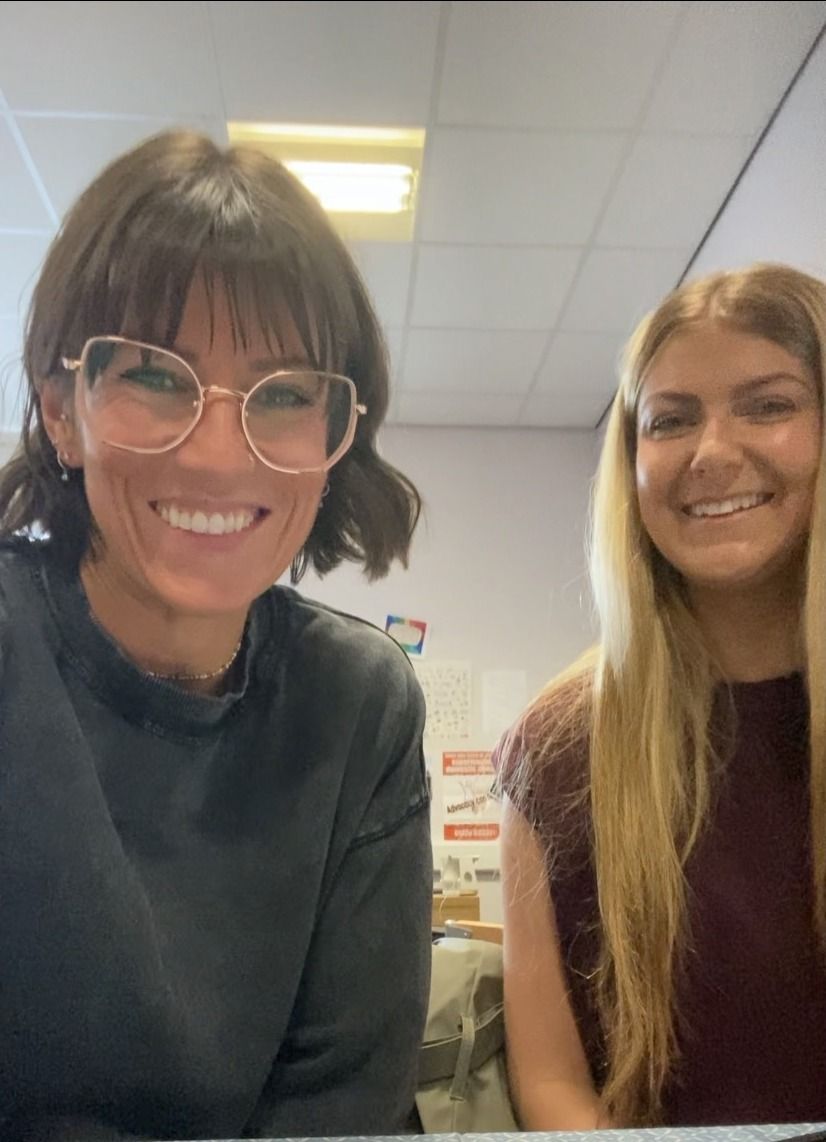
“The more conversations we had, the more I realised that listening is often more important than having the answer.”
“Those who cannot access what they need are often those who need it most, and that is a good place to start.”
“Community health is not something delivered to a place, but something built within it over time.”
Talk to us
If you run a community organisation in Stirling and would like to talk about what Move Health could offer, or what we should be listening to, we would welcome a conversation.