29 June to 14 August 2026
Listening First: Students Build Community Partnerships on a Community Innovation Placement
Three first-year MSc Physiotherapy students spent seven weeks meeting community organisations, listening to the people they support, and co-producing health education around what people told them they needed.
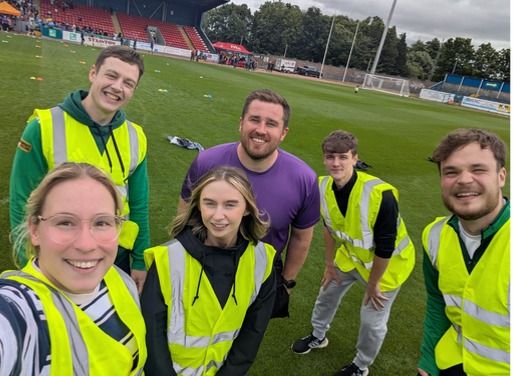
Most physiotherapy placements begin with a patient list. This one began with a blank page. In summer 2026, three MSc Physiotherapy students, Katie Roberts, Ben Woloszyn and Pete Cochrane, joined Move Health for their second placement. The brief was simple to state and hard to do: build relationships with community organisations, find out where physiotherapy could add value, and leave something useful for the next cohort.
How the seven weeks unfolded
- Week 1Getting started and understanding Move Health
- Week 2Developing partnerships and ideas
- Week 3Entering the community
- Week 4Listening and co-producing
- Week 5Developing the HEAL session
- Week 6Creating resources and building sustainability
- Week 7Delivering the HEAL session and wrapping up
Starting with the community
Rather than assume what communities need, the students started by turning up. They spent time with three organisations already doing important work in and around Stirling.
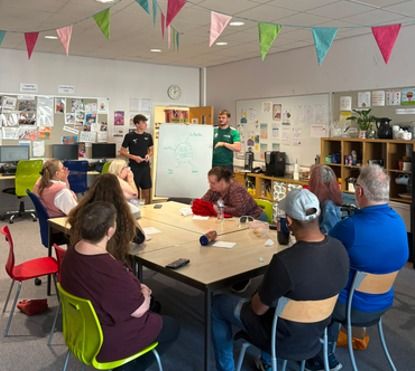
Inspiring Communities, based in Raploch, became the main community partner. The students joined weekly coffee afternoons, gardening, soup and social and craft sessions, and got to know the people who attend. It was a setting well away from a clinic. It showed them how meeting people in a place that suits them can help break down barriers to care, and made them think about what shapes someone's ability to engage with health services at all.
Active Stirling opened up a wider picture of community activity and rehabilitation, including Sportability, Recovery Olympics and cardiac rehabilitation classes. Through Bikes Without Barriers, the students tried adaptive cycling and learned from participants and volunteers about inclusion, barriers to activity and the social value of moving together. The cardiac rehabilitation team said they would welcome students attending more often.
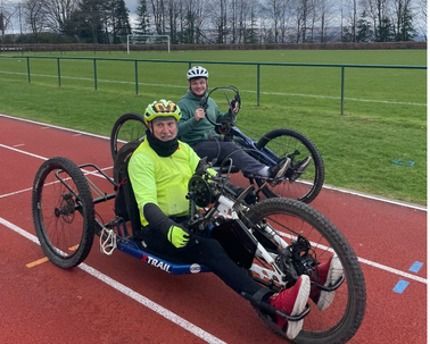
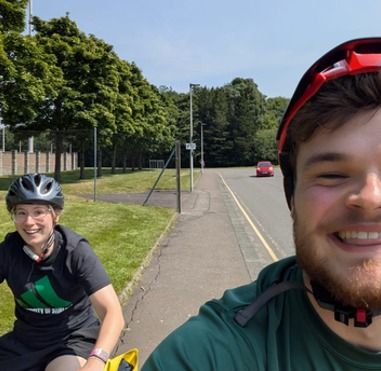
Adaptive Riders Collective (ARC) shares Move Health's belief that movement is for everyone, whatever their ability. One of the students led an engagement meeting with ARC's chief executive to explore what a long-term partnership with Move Health and the University of Stirling might look like. The conversations are still developing and include student placements, health promotion sessions, volunteering and community physiotherapy support.
What we heard
Conversations in these settings were frank. Some of what people said stayed with the students.
“I felt nobody listened.”
“I was told it was just my age.”
“I didn't know physiotherapy could help.”
“I've just learnt to live with it.”
Three themes came up again and again: low health literacy, fear of movement, and different ways of learning, including digital barriers. The students took that seriously. Their response was to design with people rather than for them, combining paper and QR code resources with discussion and practical movement.
Co-producing HEAL
That thinking led to a lower back pain education session for the HEAL (Healthy Eating Active Living) group, an Inspiring Communities initiative. The students ran a focus group first, then built the session around what the group told them. It included education, movement, a myth versus fact discussion and a leaflet, and it was designed for people who learn in different ways, with paper and digital copies, discussion, visual explanation and hands-on movement.
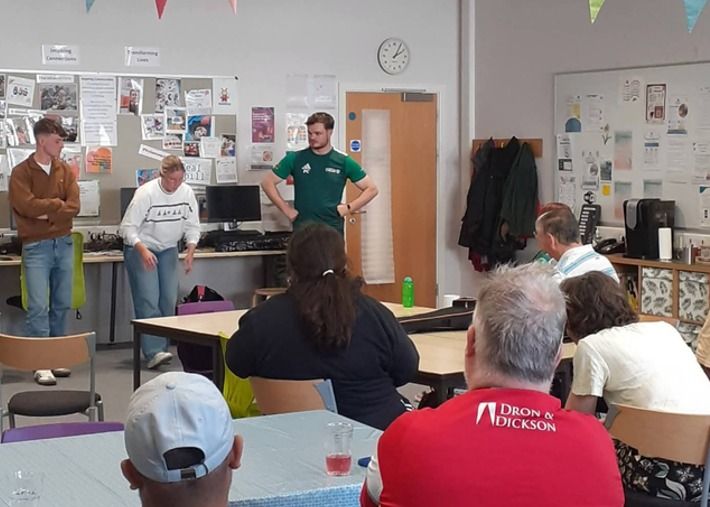
Feedback from the 10 people who attended was encouraging.
- 10 of 10said the session helped them understand low back pain more
- 10 of 10felt more confident managing it afterwards
- 8 of 8who answered said the information was easy to understand
- 8 of 9who answered would like us to come back
This was a small group, so we treat it as encouraging rather than conclusive. Read more about the session in our HEAL post.
Service development behind the scenes
Alongside the visits, the students did the less visible work that makes partnerships last. They mapped stakeholders, identified community needs and opportunities for physiotherapy, kept weekly progress records and drafted proposals for future services. Some of this could be measured. Much of it was about laying foundations for the next cohort.
“Hopefully the next cohort will not be starting from the beginning. They will have relationships, contacts, ideas, documents and lessons from our experiences that they can build on.”
What got in the way
The students were honest that it was not always smooth. An early approach to one organisation did not progress, so they widened their engagement and built other relationships instead. Because the placement ran over summer, several groups they hoped to visit were paused for annual leave. They used quieter weeks for research, planning and resource development. And the handover material from the previous group was extensive and hard to navigate, so they kept their own weekly progress notes and stakeholder summaries. We will use those to make handover simpler for the next cohort.
What the students took away
The students came away with stronger skills in health promotion, communication, project planning and partnership working, and with more confidence in adapting when plans change. Their most repeated lesson was that sustainability matters as much as delivery. Much of what they built was relationships and foundations, and those are best judged over time rather than at the end of seven weeks.
“Physiotherapy doesn't always begin with a diagnosis. More often than not it starts with listening, building trust and understanding what matters to a community.”
Three students, three partners, and a set of relationships that the next cohort can start from rather than start again.
If you run a community group or organisation and would like to explore working with students, we would welcome a conversation.
Work with us