August 2026
HEAL: Co-Producing a Lower Back Pain Session With Inspiring Communities
Students ran a focus group, listened to what the HEAL group needed, and built a lower back pain session around it. This is how it was designed, and what people told us afterwards.
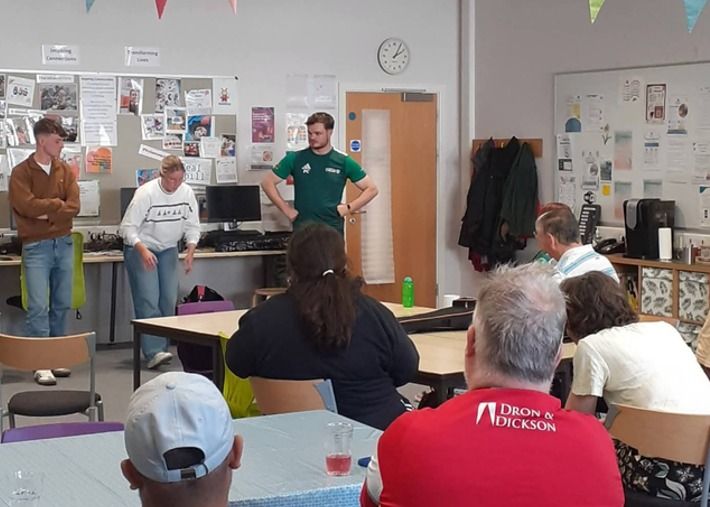
HEAL stands for Healthy Eating Active Living. It is an Inspiring Communities initiative, and in the final week of their placement the Move Health students delivered a lower back pain education session for the group. It grew out of weeks of listening, which we describe in our post on the Community Innovation placement. Here we focus on the session itself.
Starting with a focus group
Before they proposed anything, the students spent time at Inspiring Communities' coffee afternoons, gardening and craft sessions, getting to know the people who come along. They then ran a focus group and built the session around what they heard, rather than arriving with a talk and hoping it fitted.
What we heard, and what we did
- What we heardHealth literacy: not always knowing what back pain is, or that physiotherapy can help.What we didPlain-English education on how the lower back works and what can influence pain, with time for questions.
- What we heardFear of movement.What we didGentle seated exercises people could try on the day, and a myth versus fact discussion on whether exercise makes back pain worse.
- What we heardDifferent ways of learning, and digital barriers.What we didA paper leaflet with a QR code for more information, plus discussion and practical movement, so no one had to rely on a screen.
The session
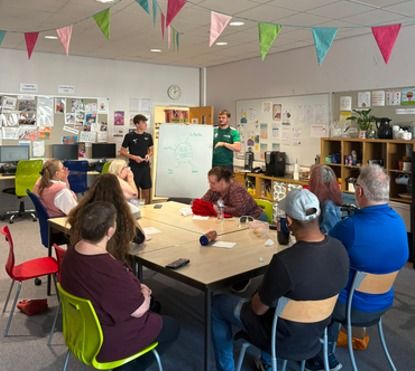
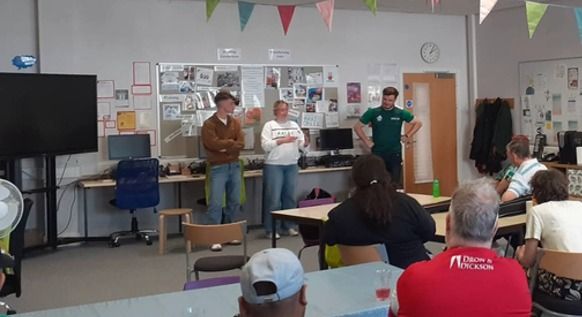
The session had three aims: to improve understanding of back pain, to increase confidence to move, and to encourage self-management. It combined education, interactive discussion, myth versus fact, practical movement and a leaflet to take home.
It was designed for different ways of learning. People could listen, look, move and talk, and the leaflet was available on paper and digitally.
The leaflet
The students wrote a two-page leaflet, Understanding Lower Back Pain, to go with the session. It covers:
- How the lower back is built and what it helps you do.
- Everyday things that can influence back pain, such as doing more than usual, sitting for long periods, stress, poor sleep and not moving enough.
- Why pain does not always mean damage. Pain works like a smoke alarm: it can warn of danger, but it can also become oversensitive.
- Three seated exercises: cat cow, knee to chest and spinal twist, which can be progressed as pain reduces.
- When to seek urgent medical help, with a QR code for more information.
The leaflet is general educational advice. It says plainly that it does not replace medical advice, and that anyone worried about their symptoms should contact their GP, ring 111 or attend A&E in an emergency.
What people told us
Ten people attended and gave feedback.
Did today help you understand lower back pain more?
Yes: 10 of 10
Did you hear something useful for you?
Yes: 9 of 10. Maybe: 1
More confident managing lower back pain after the session?
Yes: 10 of 10
Did you learn something new?
Yes: 9 of 9 who answered
How useful were the practical exercises?
Extremely useful: 7. Somewhat useful: 3
Was the information easy to understand?
Yes: 8 of 8 who answered
Would you like us to come back?
Yes: 8. No: 1. (9 answered)
This is a small group, and the feedback was collected on the day. It tells us how the session landed, not whether anyone's pain or activity changed afterwards. Not everyone answered every question, and one person said they would not want us to come back.
What the student said
Katie Roberts, one of the students, reflected on what it meant to move from one-to-one care to group education:
“This was a clear example of when I had to apply my clinical knowledge outside of a one-to-one treatment setting and helped me to understand better the importance of education in the role of a physio.”
What happens next
The leaflet is now on our Resources page, and the session gives future student cohorts something to build on and improve. We would welcome the chance to return to the group, if they and Inspiring Communities would like us to.
Listening first, then designing, then asking what people thought.
If you run a community group and would like a health education session designed around the people you support, we would welcome a conversation.
Work with us