May to August 2026
Quality Improvement in NHS Forth Valley: Helping to Understand and Redesign an MSK Service
Two cohorts of MSc Physiotherapy students combined clinical placement with quality improvement work, helping NHS Forth Valley's MSK service understand its waiting list and design a way through it.
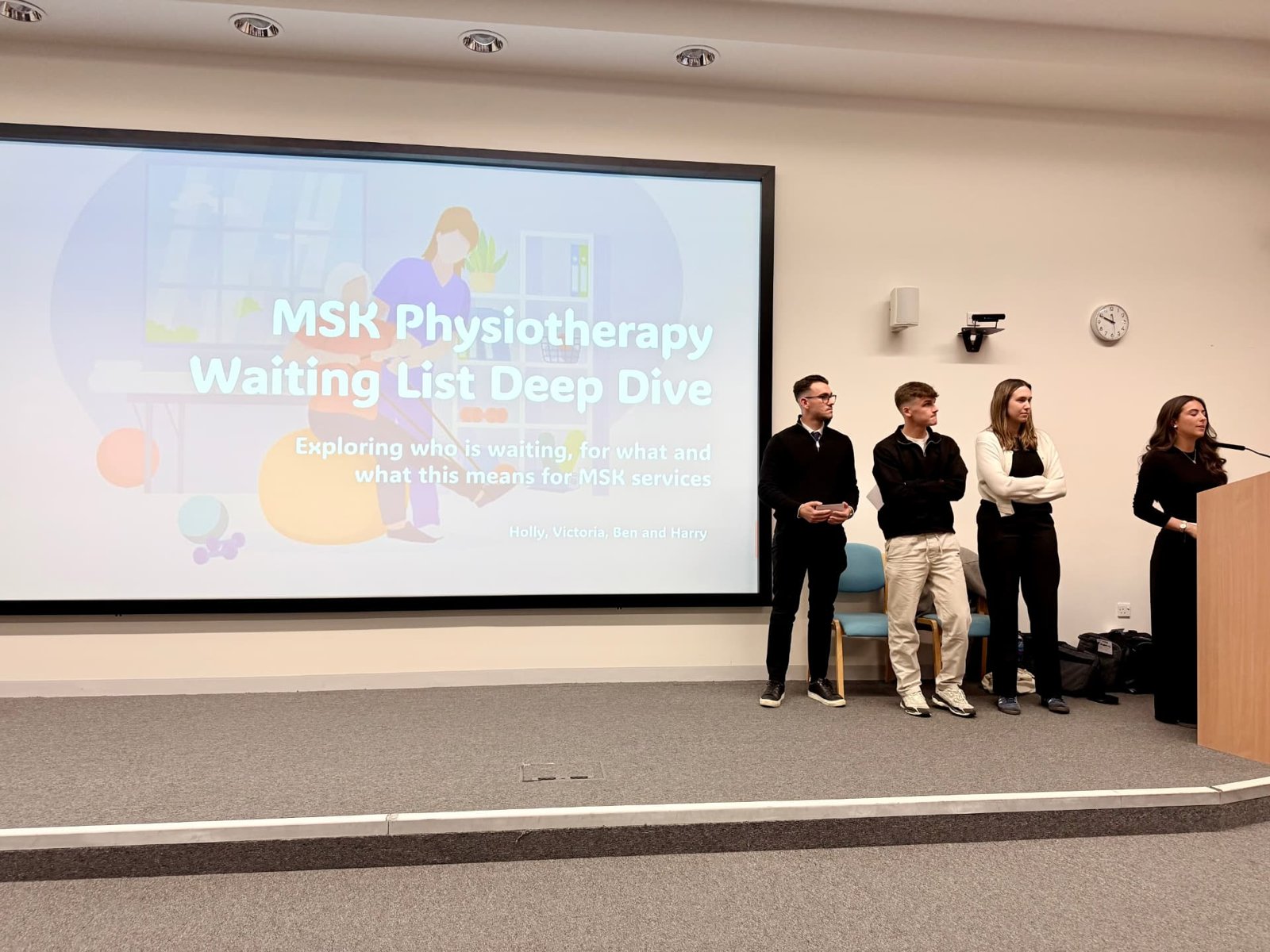
In the summer of 2026, four physiotherapy students arrived at NHS Forth Valley's MSK service with a brief to help address one of the most persistent operational challenges facing physiotherapy departments: the length of the waiting list. By the end of August, a second cohort had taken that work considerably further.
The placement model
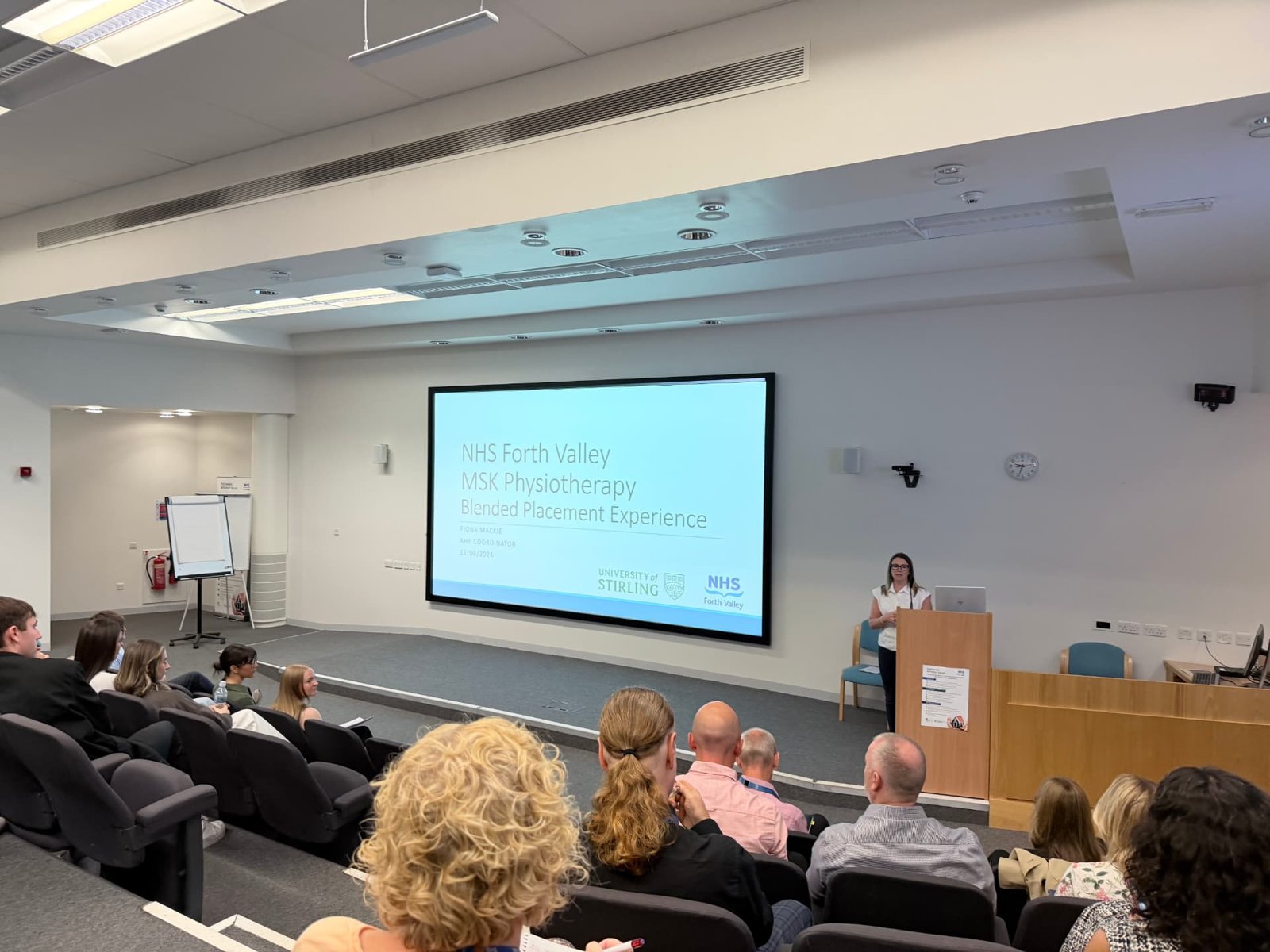
The placement model combined traditional clinical practice with dedicated quality improvement project work. Students developed their independence in patient assessment and exercise prescription, while working in parallel on a piece of service-level analysis that no one had previously had the time to complete properly.
Uncovering blind spots
The first cohort, including Holly, began by analysing the most common injuries and presentations on the waiting list, using tools such as Clinical Portal to interrogate the service's own data. From this analysis, they identified where the service could intervene earlier or more effectively and developed a set of proposals grounded in evidence rather than assumption.
John Smith, AHP Lead for MSK and Community at NHS Forth Valley, described what this revealed. Two of the four proposals developed by this first cohort are now being taken forward for implementation.
“I suspected that they might identify some issues that we were already aware of. However, I was really surprised at the volume of clinical and operational blind spots that the students shined a light on, and the solutions they offered around this.”
“I didn't expect them to be fairly proficient in QI science by just week seven. I also didn't expect students to be thinking beyond service-level changes. It was clear that the projects really stretched them and got them thinking at system-level.”
Thinking at system level
Holly's own account supports this. Balancing the clinical and project components of a genuinely new placement model was not straightforward. She described putting in additional time outside clinical hours to ensure neither element was compromised.
“At times, juggling clinical responsibilities alongside progressing the QI work was challenging, particularly when there was limited time available to complete both.”
“Analysing the waiting list and considering potential solutions required us to think critically about the reasons behind service pressures, rather than simply identifying a problem. This was challenging at times, but it helped me develop a more system-level way of thinking, which is something I will take forward into my future career.”
From diagnosis to design
A second cohort of students then picked up where the first had left off. Rather than repeating the analysis, they took the identified issues and opportunities and developed proposals for new services and initiatives to address them directly, moving the work from diagnosis toward design.
This cohort's experience was shaped by something beyond the project work itself. David Porter, MSK Clinical Education Lead, observed a dimension of the peer-assisted learning model that goes beyond the clinical discussion it is usually credited with, noting when the students stepped up to support each other.
“We talk a lot about the clinical discussion benefits of a PAL placement, but there is clearly a leadership and support element too.”
It is a small moment, but important: the students were not only developing proposals for the service, they were developing each other.
Workforce and system impact
Across both blocks, the placement prompted a broader reconsideration of workforce development at NHS Forth Valley. John noted an outcome he had not anticipated:
“I think we've all been pleasantly surprised by how re-energised our local team is after the student placements and presentations.”
For Paul Cameron, AHP Director at NHS Forth Valley, the significance extended beyond any single project. The placements undertaken by the first cohort of MSc Pre-Reg Physiotherapy students from the University of Stirling allowed NHS Forth Valley to explore the development of the future workforce through models that expand on the traditional offers. Presenting service redesign evaluations to senior leadership exposed students to other areas and developed their thinking in a whole-system space. He added that the skills developed would be “sought after in the workplace” and would “demonstrate the direction of travel for future newly qualified staff.”
Honest reflection
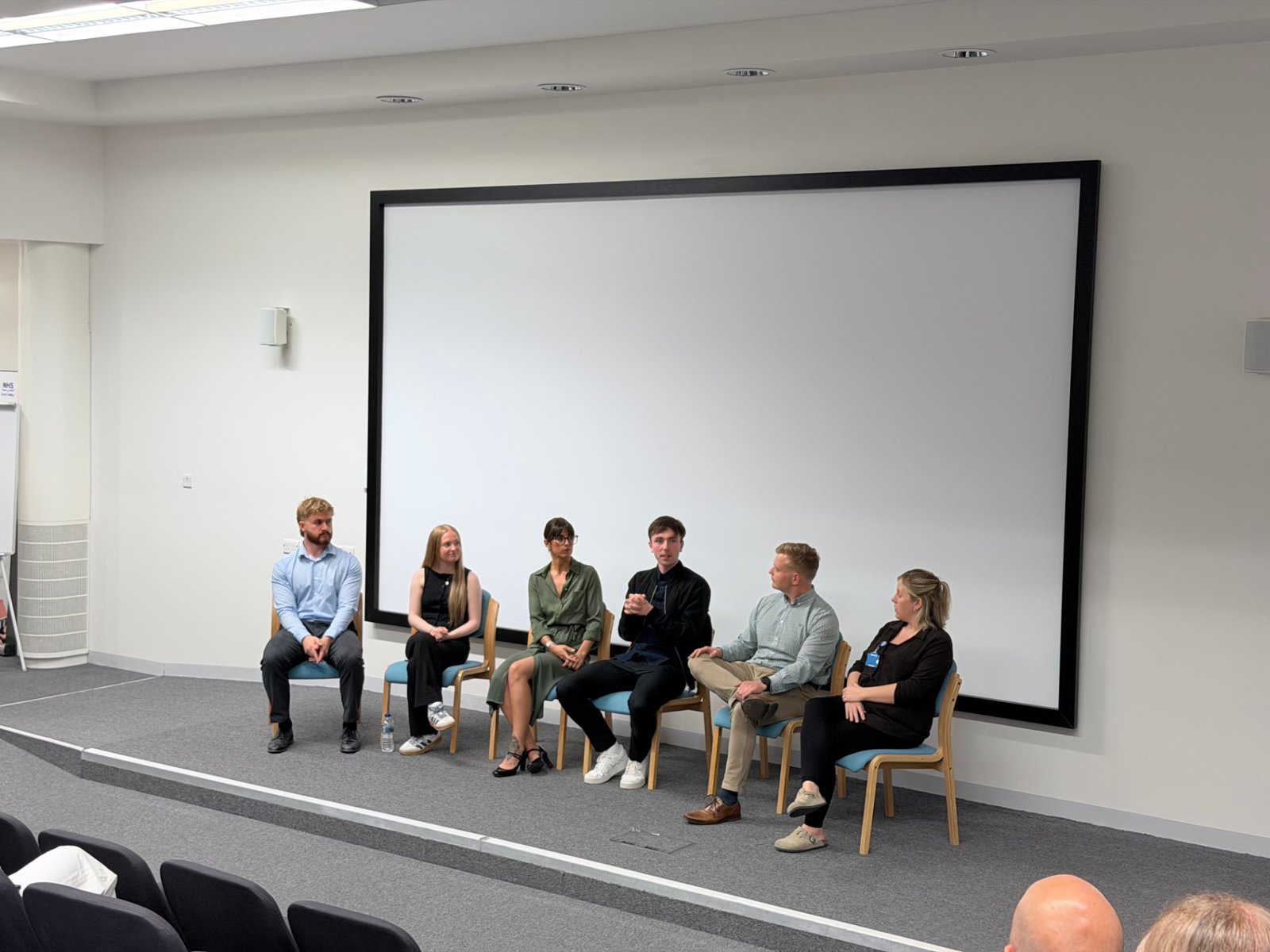
David Porter also reflected on the scale of what had been achieved across both cohorts, and was equally candid about what could be improved:
“One was the significant increase in student placements over a relatively short time period, 8 students over 14 to 15 weeks, which shows a real benefit to the PAL model.”
“I think we can now set clearer expectations from what is expected of students within MSK, APP and orthopaedics during a more project-focused placement. We could have had a clearer and more consistent message during the QI meetings in regards to the direction of the projects.”
Two cohorts, one waiting list, and a service that moved, over the course of a summer, from identifying its own blind spots to designing a way through them.
If you are an NHS team or healthcare provider interested in collaborative placement models, we would welcome a conversation.
Work with us