Research and Innovation placement, 29 June to 14 August 2026
Building the Move Health MOT: Students Prepare for Stirling Science Festival
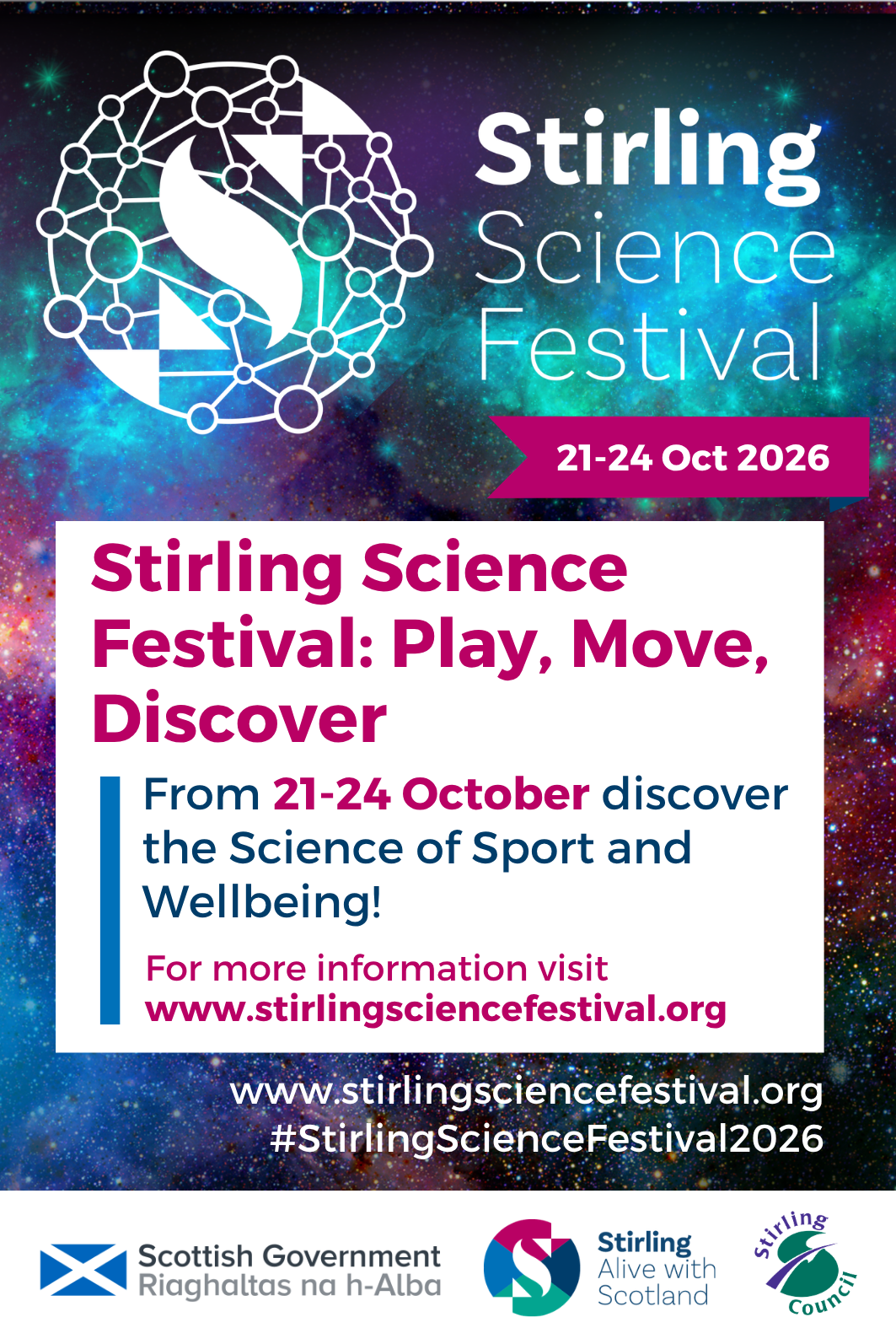
Two MSc Physiotherapy students spent seven weeks designing, testing and refining a free community health MOT. You can try it for yourself at Stirling Science Festival on Thursday 22 October.
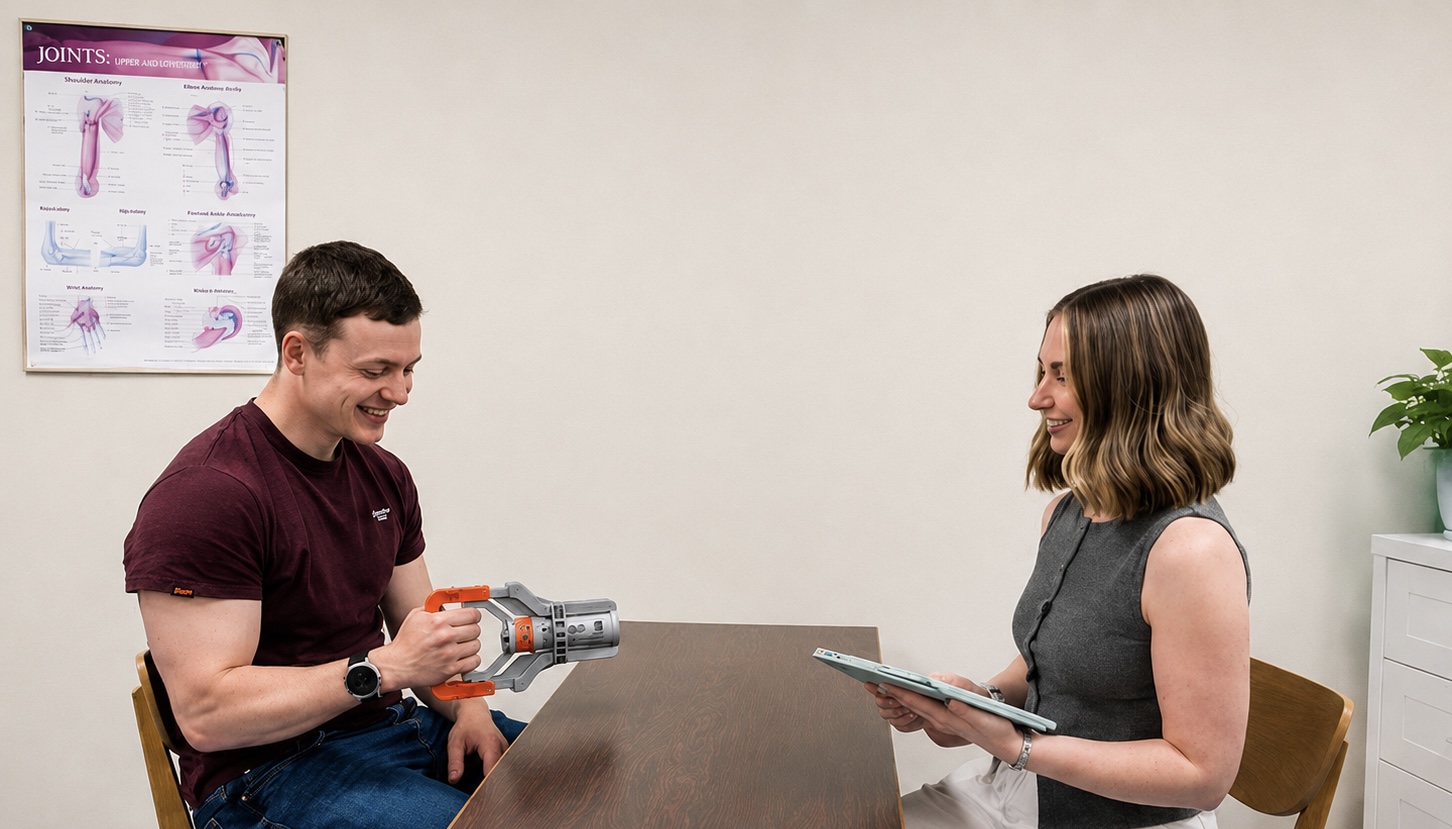
Most health checks happen in a clinic, by appointment. This one is designed for a festival, with no appointment needed. Over seven weeks, MSc Physiotherapy students Sophie Wright and Sam Williamson took the idea of a Move Health MOT and turned it into something ready for the public. The delivery is still to come. This post is about the work that got it there.
The brief
The students were asked to:
- Refine the MOT with a clear reason for every measure included
- Plan the practicalities, including venue, how people will take part, consent and data handling
- Run a pilot session and collect feedback
- Write an evaluation report, with recommendations for the next cohort
What they built
The MOT is a free, hands-on check of how your body moves. It is not a medical test and it does not diagnose anything. There is no right or wrong, and no one is compared with anyone else. There are five short stations:
- StrengthGrip strength, using a handheld device
- BalanceA four-stage standing balance test, or a seated balance test if that suits you better
- MobilityShoulder mobility and a seated reach, on the floor or in a chair
- Heart and lung fitnessA 30-second sit-to-stand, plus resting heart rate, blood pressure and blood oxygen level
- Health literacyA short quiz about how confident you feel understanding and using health information
Everyone leaves with a Health Passport: a personal record of their results, a plain-English explanation of what each measure tells you, and a QR code to local activity opportunities, government guidelines, trusted health information, community events and future Move Health sessions. The passport is for information and education only. It is not a diagnostic tool.
It was designed to include everyone. There are chair-based options, a modified sit-to-stand where you can use your hands for support, and instructions given by demonstration as well as in words. You can skip any station or stop at any time. The MOT is delivered by students under the supervision of registered physiotherapists and within their competence. They do not diagnose, treat or give individual clinical advice.
Why a health MOT?
Health information is often harder to use than it should be. Around 4 in 10 working-age adults in England find health information written for the public difficult to understand, and around 6 in 10 find it hard when it includes numbers. Health literacy tends to be lower in more disadvantaged communities, so the people already at greater risk are often the least well served. A simple, free, hands-on check in a friendly public space is one way to start conversations about movement and health and to point people to trusted information. It complements NHS and community services. It does not replace them.
Testing it first
Before taking the MOT to the public, the students ran a pilot on 29 July. Six volunteers took part, and five assessors ran three of the physical tests from start to finish: grip strength, the 30-second sit-to-stand and the timed up and go. The pilot included the briefing, consent and an evaluation questionnaire, because the aim was to check the whole pathway, not just the individual tests.
The session was clearly explained and well organised
6 of 6 participants strongly agreed
I felt safe throughout
6 of 6 strongly agreed
The instructions at each station were clear
6 of 6 strongly agreed
I was comfortable during the tests
5 of 6 strongly agreed (the sixth agreed)
The tests could be completed safely (assessors)
4 of 4 assessors who completed the questionnaire strongly agreed
“Maybe more breaks in between”
“Instructions were very clear, assessors were very friendly. Lovely and quick!”
“Well organised and explained clearly”
The students were careful about what this does and does not tell us. Everyone in the pilot was an MSc Physiotherapy student who already knew the tests, and the pilot covered three tests rather than all five stations. The sessions also ran faster than expected, about 10 minutes per group, which is probably partly down to that familiarity. So we are not drawing conclusions about timing or support needs for the public yet. The students recommended a further pilot with the full set of stations, and we are considering whether that is possible before the festival.
What they changed
The pilot turned up practical things that a plan on paper had missed:
- The written instructions for the timed up and go did not say exactly where participants should sit at the start. The students clarified this.
- Participants suggested short breaks between stations. These are now built in.
- Sweaty hands made the grip device harder to hold, so paper towels will be available at that station.
- A turning marker was not available, and the improvised one was a potential trip hazard. No one was hurt, but the students recommended equipment checks as part of every set-up.
What the students learned
Sophie and Sam came away with a clear sense of how long a good evidence review takes, why every part of a protocol needs testing, and the value of asking for support early. They also found that clear instructions matter as much as the tests themselves.
“The placement strengthened our confidence, independence and understanding of collaborative health service development.”
The students also supported the preparation of a new cancer prehabilitation pilot with NHS Forth Valley. Read about that work in our cancer prehabilitation post.
What happens next
On Thursday 22 October we will take the MOT to the public. We will collect anonymous feedback, record how each station works in practice, and share what we learn here, including what did not work.
Come and try it, and tell us what you think.
If you would like a Move Health MOT at your community group, workplace or event, we would welcome a conversation.